The Silence Where a Tail Used to Wag
There is a particular kind of quiet that moves into a house after a pet dies. It is not the comfortable silence of a peaceful afternoon. It is the absence of small, familiar sounds — the click of nails on the kitchen floor, the soft thump of a body settling against your leg, the sudden rustle of a toy being dropped hopefully at your feet. For the first few days, you catch yourself mid-motion: turning to fill a bowl that no longer needs filling, opening the door a little wider, listening for a greeting that will not come. When goodbye comes too soon, the loss is not only of a companion. It is the loss of a rhythm your whole household had learned by heart.
If you are reading this with a fresh ache in your chest, please know something first: what you are feeling is real, and it is large, and it is allowed. We are told, sometimes gently and sometimes not, that “it was just a pet.” But anyone who has loved an animal knows there is no “just” about it. A pet is a witness to your life — to your lonely evenings, your celebrations, your ordinary Tuesdays. They saw you at your most unguarded, and they loved you anyway. Grief for that kind of love is not excessive. It is simply the other half of having cared so deeply.
What follows is not a manual for grieving, because no such manual exists. It is something gentler: a reflection on why a tangible, holdable memory can help us carry a beloved pet forward, what many people naturally do with the things their animal left behind, and a simple, low-pressure framework for creating a small “memory corner” at home. If any part of it feels useful, take it. If it doesn’t, let it go. There is no wrong way to remember someone you loved.
Why the Emptiness Feels So Physical
Grief after the loss of a pet is strange because our culture rarely gives it a shape. We know how to show up for a friend who has lost a parent or a grandparent. We have words, rituals, casseroles. But the death of a cat or a dog often happens quietly, inside a home, with no funeral and no guestbook. The result is that the loss can feel almost illegitimate — too big to ignore, too “small” to name out loud.
And yet the emptiness is physical. You feel it in the spot on the couch that stays empty. In the leash that hangs by the door like a question. In the way the morning walk suddenly has no destination. This is because animals live in our space more than almost anyone else does. A human partner goes to work, a child goes to school, but a pet is there — there in the doorway, there in the sunlight on the floor, there in the bed at 3 a.m. When they are gone, the geography of your home changes. You are living inside a map that no longer matches the territory.
That is why, for many people, the instinct to hold onto something — a collar, a paw print, a photograph, a little box of ashes — is not morbid. It is a way of saying: this was real, and I am not ready to let the proof disappear. A tangible object becomes a small anchor in a house that has started to feel like it is drifting.
“Grief, someone once said, is love with nowhere to go. A keepsake is simply a place to put the love.”
The Human Need for Something We Can Hold
There is a reason we press flowers, frame tickets, and keep baby shoes in a box. Human beings are sensory creatures. We remember through touch as much as through thought. A memory held only in the mind is fragile — it flickers, it softens, it gets crowded out by the noise of ordinary life. But a memory attached to an object has weight. You can run your thumb along a wooden frame. You can feel the coolness of ceramic. You can see, at eye level, a little likeness of the face you miss.
This is not about refusing to move on. It is the opposite. Strange as it sounds, having a physical place for the grief often helps people move — because the love no longer has to be carried entirely in the head, where it can circle and sharpen. When the memory has a shelf, the mind gets a little quieter. You are not forgetting. You are simply giving the remembering somewhere to live.
For pet owners especially, this matters because so much of the relationship was physical. The weight of a cat asleep on your chest. The lean of a dog against your knee. The particular warmth of a body pressed to your side on a hard day. A photo captures how they looked, but it cannot capture that sense of presence. This is where a three-dimensional, handmade object can do something a flat picture cannot: it restores a little of the shape and solidity of the creature you held.
What People Do With the Things a Pet Leaves Behind
In the days and weeks after a loss, a kind of quiet inventory happens. You find the toys under the bed. The half-empty treats jar. The collar, still smelling faintly of them. Many people wonder what to do with these things, as if there were a correct answer. There rarely is — only what brings comfort. Here are some of the gentle, common things people do, none of them required, all of them valid.
The Collar and the Tags
For many owners, the collar is the first thing they cannot bring themselves to throw away. It is so small, and it represents so much — every walk, every adventure, every time they slipped out the door and you chased them laughing. Some people hang the collar on a hook by the door, where it always was. Others tuck it into a memory box, or hang it from a small nail in a closet they open when they need to. There is no hurry to decide. Letting it sit, untouched, for a while is its own kind of honoring.
The Photos
Almost everyone takes more photos than they realize. The ones from holidays, yes, but also the blurry ones — the cat on the laundry, the dog mid-shake, the sleeping heap on the sofa. These are often the most precious later, because they capture the everyday rather than the occasion. Printing a few and placing them in a frame, or making a tiny album, turns a phone gallery into something you can actually hold. A printed photo on a shelf does quiet work: it keeps the face in your daily line of sight, so the memory is tended rather than buried.
The Ashes
If you chose cremation, you now hold a small, heavy container that contains the whole physical history of your companion — every walk, every nap, every greeting at the door. Many people are unsure what to do. Some scatter in a favorite place. Some keep a portion in a small keepsake urn. Some divide a little into jewelry or a garden stone. The decision does not have to be made in grief’s first raw weeks. Ashes wait. What matters is that, when you are ready, the choice feels like yours and feels like love.
For those who keep a portion at home, the vessel matters more than people expect. A plain cardboard box from the clinic does its job, but it does not honor the life the way a considered object can. This is one of the places where a custom pet memorial gift — specifically a carefully made ceramic urn — can quietly transform a clinical necessity into a tender one. We’ll come back to that.
The Toys and the Bed
Some people wash and store the bed, keeping it as a soft archive of scent and shape. Others donate unopened food and gently used items to a shelter, which can be a beautiful way to let the love ripple outward. There is no timeline. One owner I know kept her dog’s squeaky ball on the nightstand for two years before she could finally tuck it into a box — and even then, she kept it.
A Face You Can See: The Comfort of a Needle-Felted Replica
Photographs are wonderful, but they are flat, and they live in albums or behind glass. There is something different about being able to see your pet’s actual shape resting on a shelf — the tilt of the head, the set of the ears, the way they always cocked one paw. This is the quiet magic of a handmade needle-felted memorial figurine.
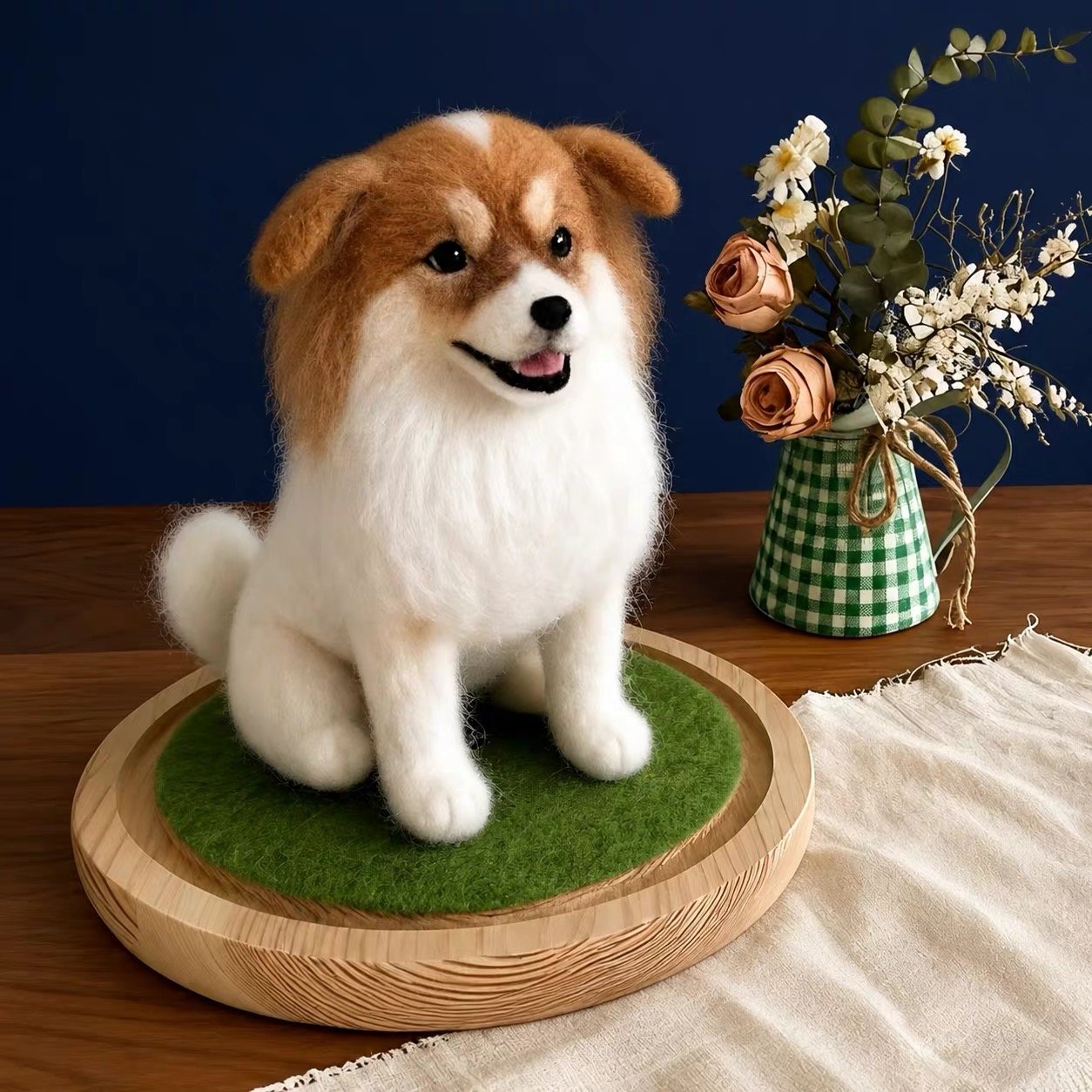
A needle-felted replica is, in the most loving sense, a custom pet portrait realized in wool rather than paint. An artist studies your photos and recreates your companion in three dimensions — the curl of the tail, the markings, the expression that was so distinctly them. The result is not a cartoon and not a photograph. It is a small, soft, surprisingly lifelike sculpture that captures presence rather than perfection. Mounted in a frame, it becomes a little window into a life.
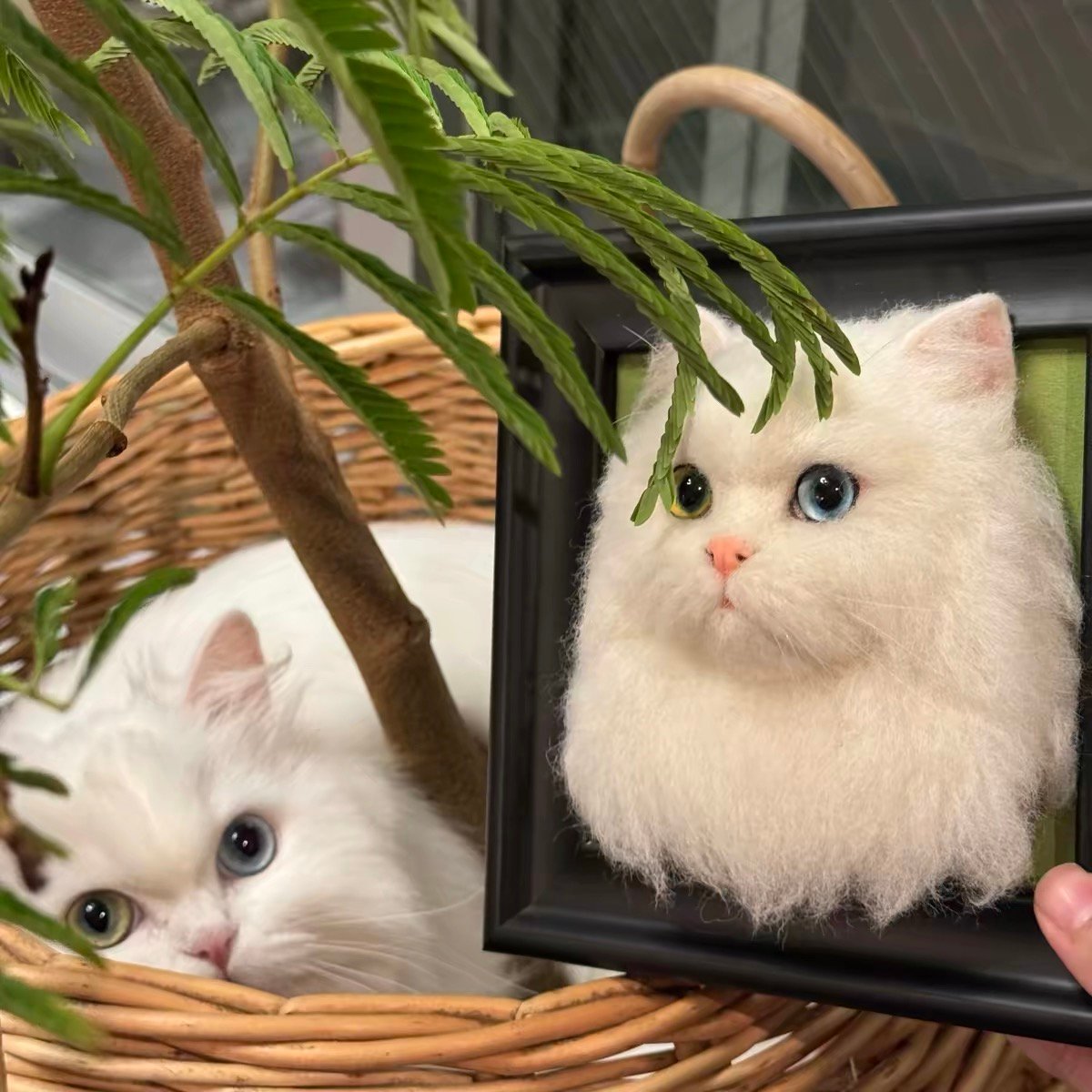
Why does this help? Because grief is often a fear that we will forget — forget the exact shape of their face, the way they looked when they slept, the particular curve of their body curled against us. A felted likeness answers that fear gently. You can look at it each morning and know: I still see you. And because it is handmade, it carries something else — the unmistakable warmth of human hands that spent hours trying to get your pet right, because they understood this mattered.
People often tell us the figurine becomes the thing their eye finds first when they walk into a room. Not in a painful way, but in a grounding one — a small, consistent reminder that the love happened, and is still here, just changed form. For those building a memory corner, this piece is often the heart of it.
A Vessel That Honors: The Ceramic Memorial Urn
If you are keeping a portion of your pet’s ashes at home, the container you choose shapes how that keepsake lives in your space. A clinical box can make the loss feel like a medical event. A considered, handcrafted urn does the opposite: it tells the truth that this was a family member, and deserves beauty.
A well-made ceramic urn offers something practical and something emotional at once. Practically, a good ceramic piece is airtight and moisture-proof, protecting what’s inside through years of sitting on a shelf or mantel. Emotionally, it becomes a dignified resting place — something you are not tempted to hide in a closet, but are instead happy to display among the things you love. Many owners place the urn in a spot where soft light falls on it, sometimes with a photo beside it, sometimes with a small plant. It stops being an awkward secret and becomes a quiet companion.
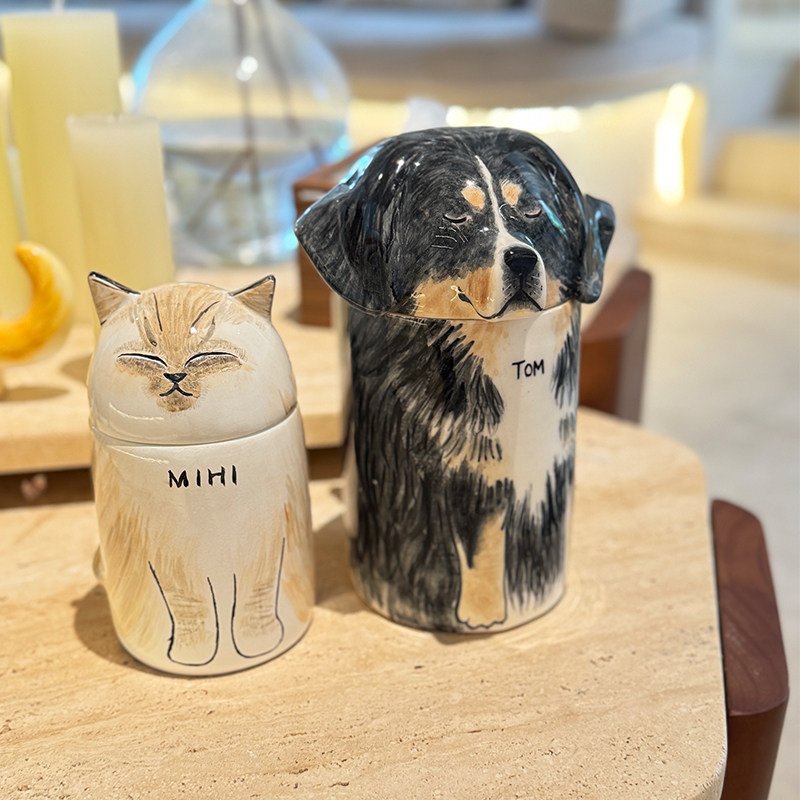
For those seeking pet memorial gifts for a friend in mourning, an urn — or a contribution toward one — can be a profound, practical kindness. Words often fail the bereaved, and a gift that acknowledges the depth of the loss, rather than minimizing it, can mean more than any card. If you are the one grieving and someone offers this, it is okay to receive it. Letting others carry a little of the weight is not a weakness.
Building a Memory Corner: A Gentle, Practical Framework
You do not need a shrine. You do not need to dedicate a whole room, or spend money, or make anything permanent. A “memory corner” is simply a small, intentional spot in your home where a few meaningful things live together — a place your eye can rest, and your heart can visit without ceremony. Here is a simple framework you can adapt. There is no right order, and you can start with whatever you already have.
Step 1: Choose a Spot That Already Feels Safe
Look for a place you pass often but where the energy is calm: a mantel, a bedside table, a shelf in the hallway, a corner of the living room. Avoid anywhere you’ll feel pressured to “explain” it to guests — this is for you. A low, stable surface is best if you include anything breakable. Some people even use a small tray so the corner can be moved or tucked away on harder days.
Step 2: Start With One or Two Things, Not Ten
The instinct can be to gather everything at once. Resist that. Begin with one or two objects that feel most like them: a collar, a favorite photo, the urn, the felted figurine. A memory corner works best when it breathes — when each item has room to mean something, rather than becoming a pile. You can always add more later, or rotate pieces as your grief changes shape.
Step 3: Add a Little Life
Many people place a small plant, a candle, or a flower near the memorial items. Living things beside memorial things carry a quiet message: love and loss sit next to each other, and life continues. A low-maintenance plant — a succulent, a small fern — asks little and gives a lot. A candle can be lit on hard anniversaries, or simply when you want a few minutes with the memory.
Step 4: Include a “Story Object”
This is the item that tells a story without words — the squeaky toy they loved, the bandana from a road trip, the tiny sweater from a cold winter. These objects do more emotional work than we expect, because they summon a specific memory rather than a general ache. One owner keeps a single tennis ball, worn and gray, because it was the first thing her dog ever fetched. That ball says more than any portrait.
Step 5: Let It Change
Your memory corner is not a museum. It is allowed to evolve. In the early weeks it might hold only the urn and a photo. Months later you might add the felted figurine. Years later you might move it to a quieter shelf, or add a new pet’s collar beside the old one — a quiet testament that your capacity to love did not end with the loss. There is no final version. There is only what helps, today.
“A memory corner is not a place to say goodbye. It is a place to say: you are still part of this home.”
When a New Pet Arrives — and When One Doesn’t
People will tell you, sometimes within days, that you should “get another one.” This comes from love, usually, but it can feel like pressure. The truth is more nuanced. Some people are ready, months or years later, to open their home to a new animal — and when that happens, it is not a replacement. It is a new relationship, built on different paws, and it does not erase the one before. In fact, many people find that loving a new pet deepens their gratitude for the one they lost.
Others never bring another animal home, and that is equally whole. The love you gave was not a habit you need to refill. It was a relationship, and it ended, and you are allowed to let it stand as it was. A memory corner honors exactly this: that this particular life, this particular bond, was complete in itself.
And if a new companion does arrive, your memory corner can gracefully make room. Placing a new collar beside an old one is not a betrayal — it is a quiet acknowledgment that your heart turned out to be larger than the grief told you it was.
A Few Words on Grieving Well
Because this article is for the person in the thick of it, a few gentle truths, offered without prescription:
- There is no timeline. The “five stages” are a description, not a schedule. You may feel fine on Tuesday and wrecked on Thursday. Both are normal.
- The hard dates will be hard. The anniversary of their death, their birthday, the first snow they’ll never see — these can hit harder than expected. Plan something gentle for those days, even if it’s just lighting a candle.
- Talk to them. Many people find comfort in speaking aloud to the pet they lost. It is not strange. It is love looking for an outlet. Your memory corner is a good place for this.
- Let others help, selectively. Some friends will say the wrong thing. Others will simply sit with you. Seek the sitters. The ones who say “I’m so sorry, I know how much she meant to you” are gold.
- Guilt is common and rarely accurate. Almost every pet owner wonders if they did enough, soon enough, right enough. Most of the time, the animal knew only that they were loved. That was the part that mattered to them.
Small Rituals That Carry the Love Forward
Beyond the memory corner, many people find that tiny rituals keep the bond alive without keeping the wound open. These need not be elaborate:
- Light a candle on the anniversary and tell one favorite story out loud.
- Make a small photo book once a year, on their birthday, and look through it with someone who knew them.
- Donate to an animal shelter in their name — a living legacy that fits their generous spirit.
- Keep a “remember when” note on your phone, and add a line whenever a memory surfaces. One day it will be a beautiful, unsent letter.
- If you have a custom pet memorial gift like a felted figurine, dust it gently now and then. That small act — caring for the likeness — can itself be a moment of connection.
The point of all these rituals is not to stay stuck. It is to integrate the loss into the ongoing story of your life, the way a river integrates a fallen leaf — carried forward, changed, but never lost.
For Friends: How to Show Up
If you are reading this because someone you love has lost a pet, a few words for you. The single most helpful thing you can do is name the animal and acknowledge the loss as real. “I’m so sorry about Bailey. He was such a good dog” does more than any platitude. Avoid “at least he didn’t suffer” in the first raw weeks — it may be true, but it lands as minimization. And if you want to give something, consider a pet loss gift that honors rather than distracts: a framed photo, a donation in the pet’s name, or, when the time is right, a handmade keepsake. The bereaved rarely need cheering up. They need to be met, gently, where they are.
What a Keepsake Is — and Isn’t
To be clear, a figurine or an urn is not a cure for grief. No object can undo the loss, and anyone who promises otherwise is selling something they don’t have. What a carefully made keepsake can do is give the love a place to rest — a small, daily, tangible reminder that the relationship was real and is not over in the only way that counts, which is in your heart.
At PODPAWS, every piece we make starts from this understanding. The custom pet memorial gifts we create — the handmade needle-felted figurine in its frame, the airtight ceramic urn — are made slowly, by hand, for people in exactly the position you may be in now. We are not interested in mass-produced sympathy. We are interested in making one right object for one real grief. If and when you are ready, that object can become part of your memory corner, and part of how you carry your companion forward.
The Quiet Companion on the Shelf
In the end, this is what most of us are looking for after a pet dies: not to forget, and not to be consumed, but to find a way to keep loving someone who is no longer physically here. A felted likeness that catches the light. An urn that holds what remains, with dignity. A collar on a hook. A photo in a frame. Together, in a small corner of a real home, these become a quiet companion — present without demanding, comforting without cloying.
You do not have to be “over it” to make a memory corner. You do not have to be ready to talk about it, or to explain it, or to entertain guests in front of it. You only have to be willing to give the love a place to sit. That is enough. That has always been enough.
If today is a hard day, be gentle with yourself. Walk past the memory corner and let your eyes land on the little face there. Remember the weight of them against your side. And know that love like that does not disappear when a body does. It changes form. Sometimes, if you’re lucky, it changes into something you can hold.
However you choose to remember, whenever you are ready, the door to that memory corner is yours to open — a little light, a little wool, a little ceramic, and a love that, in the only way that matters, is still here.