The Day After: When the House Feels Too Quiet
There is a particular kind of silence that arrives after a pet dies. The click of nails on the kitchen floor is gone. The soft weight against your leg at the end of a long day no longer arrives. The bowl, still half-full on the floor, becomes the most honest and most unbearable object in the room. If you have just lost a dog or a cat who shared your life, please know this first: there is no correct timeline for your grief, and there is no version of love that was “too much” to mourn this deeply. The animal who met you at the door, who listened without judgment, who made ordinary evenings feel like home, deserved every bit of the ache you are feeling now.
This article is not here to rush you through your loss or to hand you a checklist that suggests the sadness should be “resolved.” Grief is not a problem to be solved. It is a love with nowhere to go, and the work of memorializing a pet is really the work of finding gentle, lasting places for that love to rest. What follows is a practical, tender guide to building a memorial after your dog or cat passes — a way to move from the raw first days toward something we might call a legacy. You do not have to do all of it. You only have to do what feels kind.
The First Days: Permission to Feel, Permission to Pause
In the hours and days immediately after a loss, decisions arrive faster than most of us are ready for. The veterinarian’s office may ask what you would like done with your pet’s body. Family members may ask how you are holding up. Your own mind may leap ahead to logistics while your heart is still standing still. Wherever you are in that wobble is okay.
Before any decision about ashes, keepsakes, or rituals, give yourself a short, deliberate pause. You are allowed to say, “I don’t know yet.” Most veterinary clinics will hold a beloved pet’s remains respectfully for a few days while you decide, and many offer private or communal cremation options. If you are unsure whether you want to keep ashes, you can request that they be held or temporarily stored — this choice can usually wait a week or two without pressure.
In these early days, the most useful thing you can do is tend to the basics of comfort, not the details of permanence. Drink water. Sleep when you can. Let the people who love you bring food. If the empty collar or the quiet room feels unbearable, it is completely fine to tuck those objects away for a little while. There is no rule that says a memorial must begin the moment a pet dies. Sometimes the first act of remembrance is simply letting yourself cry without apologizing for it.
A Gentle First-Step Checklist
- Ask your clinic what options they offer for holding or cremating, and take the time you need to choose.
- Designate one small, safe drawer or shelf for anything you cannot bear to look at yet — the leash, the toy, the food scoop.
- Tell a friend or family member how you would like to be supported this week, even if the answer is “just sit with me.”
- Write down the date, and one sentence about your pet, while the memory of this moment is still sharp. You will thank yourself later.
The First Forty-Eight Hours: Tending the Body That Grieves
Grief is not only something you feel. It is something that happens to the body, and in the first two days after a loss, that body is doing a great deal of unfamiliar work. Your chest may feel tight. Sleep may arrive in fragments, or not at all. Appetite can vanish, or strange cravings can appear. Some people describe a humming, restless energy; others describe a heaviness that makes the simplest task — filling the kettle, answering a text — feel like wading through water. None of this means you are doing grief wrong; it is simply the body learning to carry love without a recipient.
In these first forty-eight hours, the goal is not insight but kindness to the vessel carrying you through. Grief dehydrates; drink water even when you are not thirsty. Grief exhausts; rest even when sleep will not come, because lying still is its own form of care. If the silence of the house grows too loud, you are allowed to leave it — a short walk, a coffee shop, a friend’s sofa. You are not abandoning your pet by stepping outside; you are giving the grief room to breathe so it does not harden inside you.
One quiet practice helps many people through this window: choose one small, repeatable act of care and let it stand in for the larger ones you cannot yet manage. Water a plant. Make the bed. Feed the other animals, if there are any. These tiny rituals are proof to your nervous system that the world is still turning and that you are still here to tend it — and that proof, repeated, carries you from one impossible morning to the next.
Signs You Are Doing Fine, Even If It Doesn’t Feel Like It
- You ate something, even if it was toast eaten standing at the counter.
- You reached out to one person, even if only to say “I can’t talk yet.”
- You let yourself feel the worst of it for a few minutes without trying to fix it.
- You remembered, at least once, a happy moment — and let that memory sit beside the sad one.
There is no prize for the longest or heaviest grief. If you are still here, that is the whole assignment for now.
Deciding What to Do With the Ashes: A Dignified Keepsake
For many pet parents, the question of ashes is the first real decision after loss. Some families choose to scatter in a favorite park or backyard. Others prefer to keep a portion close. There is no right answer — only the one that brings you peace. If you are among those who wish to keep your companion near, the container you choose matters more than people expect. A cardboard box from a clinic is functional, but it does little to honor a life that meant so much.
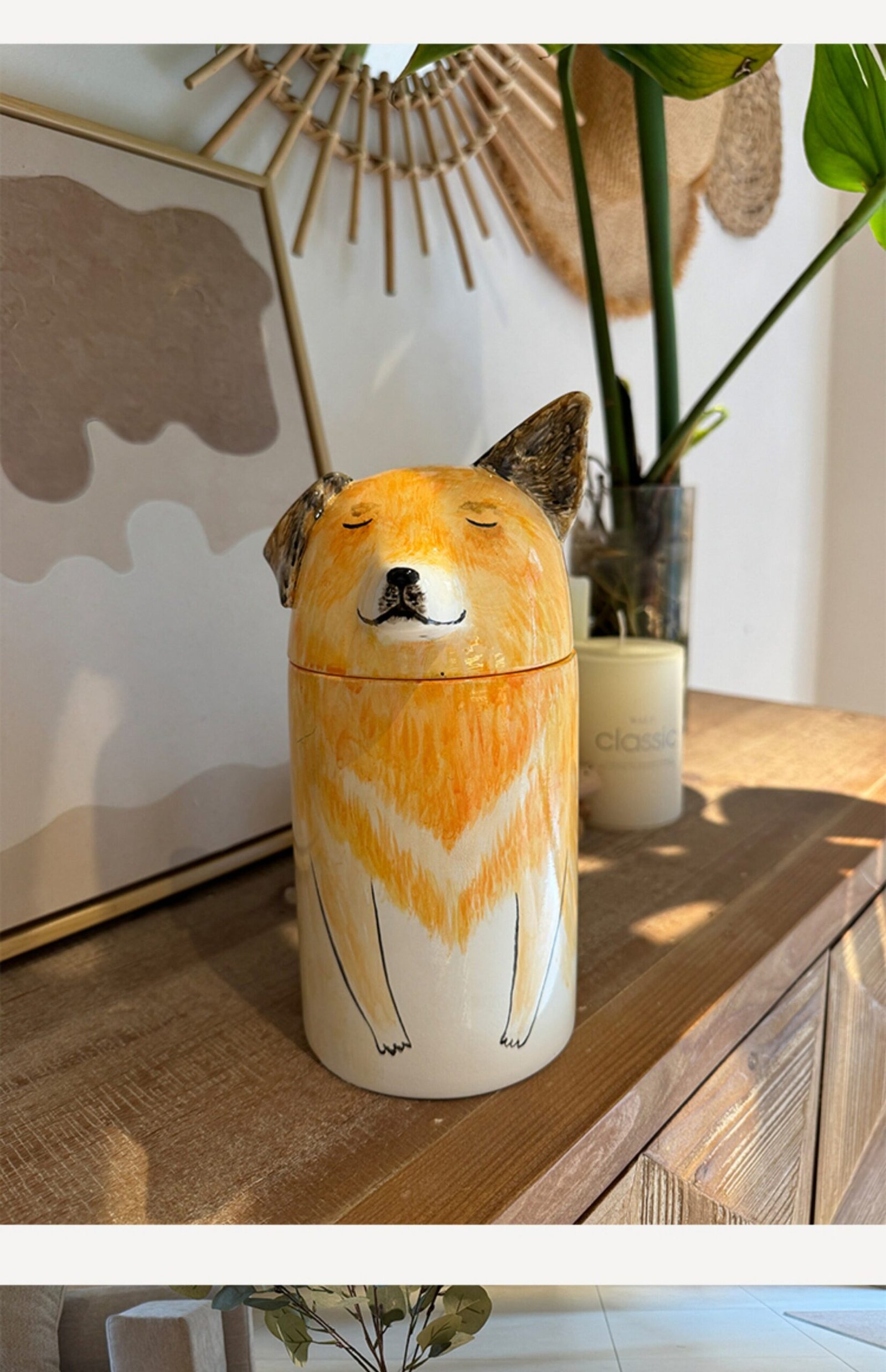
This is where a thoughtfully made vessel can change everything. A custom ceramic pet urn offers a dignified, permanent home for your dog or cat’s ashes — something you can place on a shelf, in a reading nook, or beside a window where the light falls soft in the afternoon. The right urn is not only beautiful; it is practical in the ways that count most for a keepsake meant to last decades.
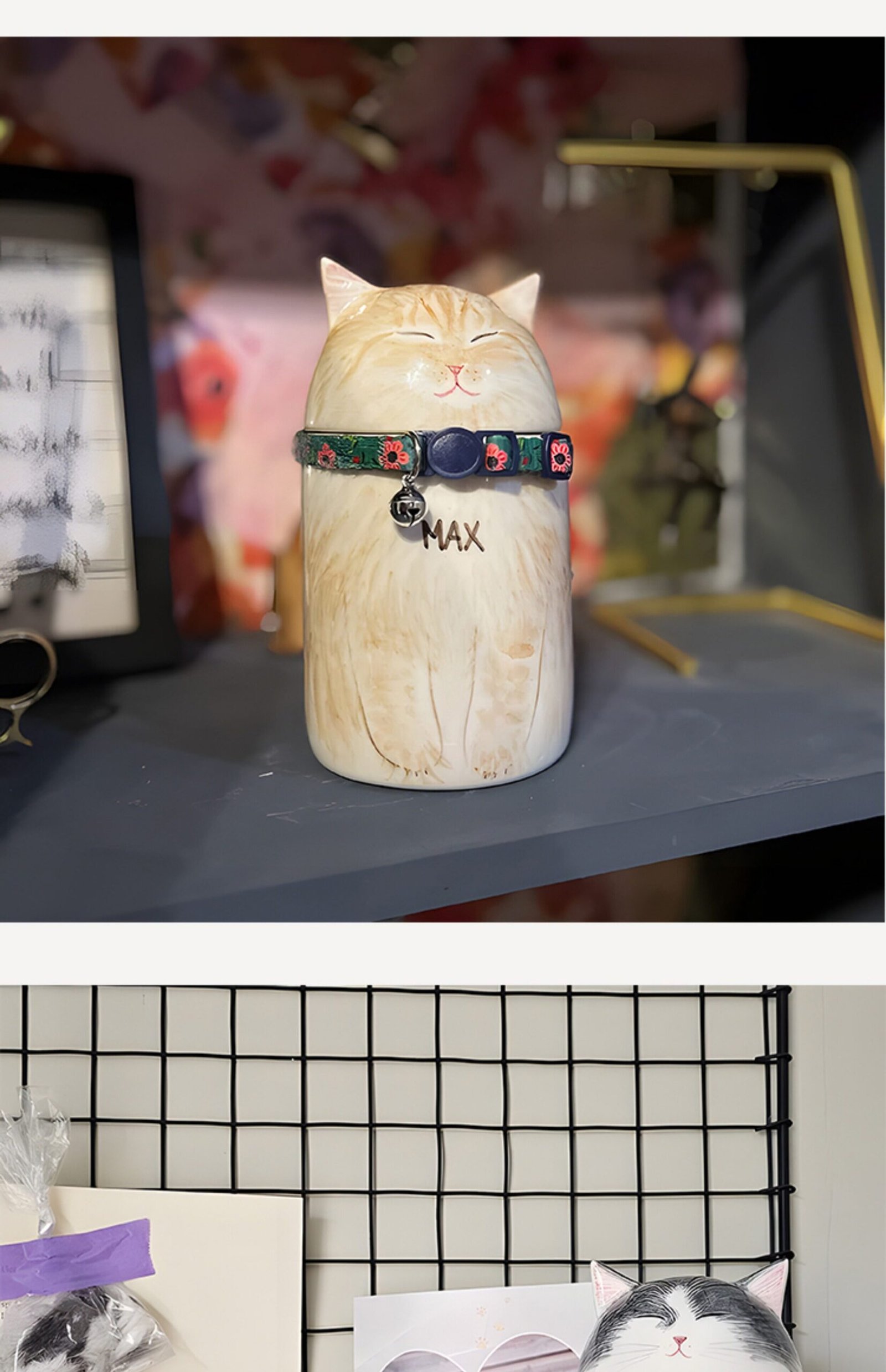
When you are choosing an urn, two qualities deserve your attention above all. The first is an airtight, moisture-proof seal. Ashes are finely processed and surprisingly sensitive to humidity; a container that lets in air or damp will, over years, compromise what it holds. A well-crafted ceramic urn with a sealed lid protects your pet’s remains from moisture, odor, and the slow wear of time. The second quality is simply whether it feels worthy — whether the shape, glaze, and weight in your hands feel like a fitting resting place for the animal who slept at your feet for so many years.
Among the many pet memorial gifts people give to a grieving friend, a keepsake urn is one of the most quietly profound. It says, without words, “your love was real, and it deserves a permanent address.” If you are shopping for someone else, a ceramic urn is a pet loss gift that honors both the person and the pet, and it spares a newly grieving friend from having to make that practical choice alone.
Questions to Ask Before You Choose an Urn
- Is the seal genuinely airtight and moisture-proof, or merely decorative? Ask directly.
- What volume does it hold? Urns are sized by pet weight; a matching size keeps everything contained in one vessel.
- Do you want space for a name, dates, or a small paw-print impression on the surface?
- Where in your home will it live, and does the style fit that space so it feels like part of the room rather than a separate “memorial object”?
A pet memorial does not have to be grand to be meaningful. Sometimes it is a single glazed vessel on a bookshelf, catching the morning sun, that lets you whisper good morning the way you used to.
A Wool Felt Replica: A Living Tribute That Stays Present
There is a different kind of comfort that arrives not from what we keep in a sealed urn, but from what we can see and touch every day. Many pet parents describe a strange ache in the evenings — the sense that something is missing from the corner of the room, the foot of the bed, the chair by the window. A ceramic urn honors rest. A wool felt memorial figurine honors presence.
A handmade needle-felted replica is, in the truest sense, a custom pet portrait — except instead of flat paint or pixels, it is sculpted in wool, three-dimensional, tactile, and unmistakably your animal. An artist studies your photos and recreates the tilt of the ears, the shape of the snout, the particular way your cat squinted or your dog leaned. Mounted in a frame, it becomes a small, permanent resident of your home: not a photograph that fades, but a sculpted likeness that holds a posture you would know anywhere.
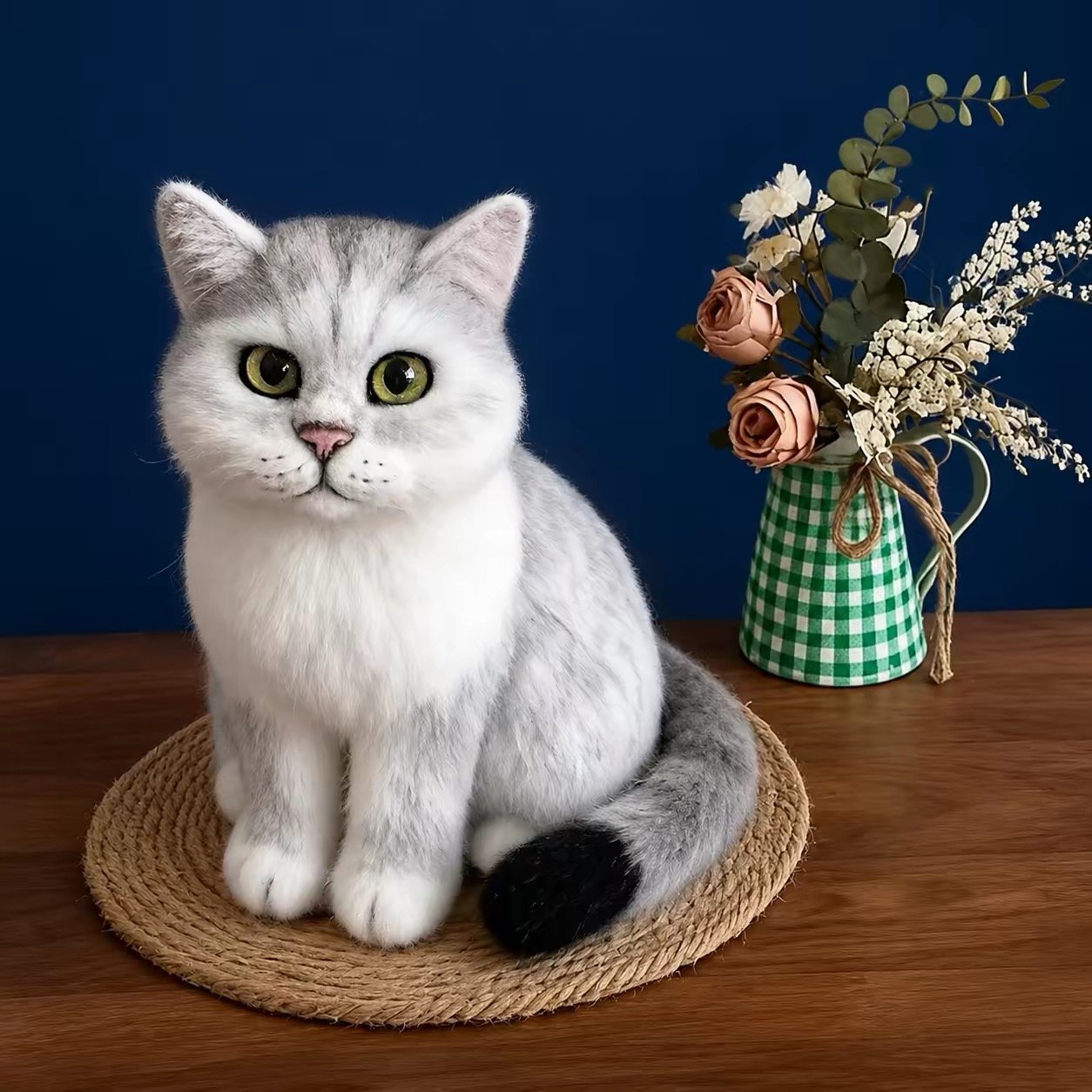
What makes a wool felt figurine such a powerful pet memorial gift is its daily presence. Grief comes in waves, often at ordinary moments — passing the spot where the bowl used to be, reaching for the leash out of habit. Having a gentle, handmade likeness in view does not erase the loss, but it softens the absence. It tells the room, and tells you, that this animal was here, and is still represented, still part of the furniture of your life.
If you are commissioning one of these custom pet memorial gifts, the single most important ingredient is good photographs. Gather images that show your pet from the front and the side, in natural light, with ears and face clearly visible. Include a photo that captures their “essence” — the sleepy squint, the excited tilt, the serene stare — because the best felt artists are not only reproducing anatomy, they are reproducing personality. Mention small details: a favorite collar color, a crooked tail, a patch of fur that was somehow asymmetrical. Those imperfections are the fingerprints of your particular bond.
Why a Tangible Tribute Helps
- It gives your eyes somewhere to rest that is not a screen or an empty corner.
- It becomes a point of connection when friends visit — “that’s exactly how she used to sit.”
- It is durable, unlike flowers or cards, and can move with you through every home you live in after.
- It honors the everyday, not only the final day, which is where most of a life together actually happened.
Choosing the Right Artist for Your Felt Tribute
Because a wool felt figurine is, at heart, a custom pet portrait rendered in three dimensions, the artist you choose shapes everything about the finished piece. The finest makers treat each commission as a personal custom pet portraits you will own, not a product on a shelf. Look for makers who ask specific questions — about your pet’s build, their expressions, the tilt of a single ear — rather than those who promise a generic resemblance. A good artist will want several reference photos and will happily discuss the proportions of the snout or the set of the eyes before a single needle touches the wool. Read reviews that mention likeness and emotion, not only craftsmanship, because a figurine that does not feel like your animal will not do the quiet work you need.
It is also worth considering whether you want the figurine standalone or set within a framed scene — a small felted bed, a tiny favorite toy, a backdrop of the room where your pet used to nap. These additions turn a likeness into a setting, and a setting into a story. Among all the custom pet memorial gifts available, the framed scene is the one people return to most often, because it recreates not just the animal but the life around it.
Building a Memory Box: One Drawer for a Whole Life
Not everything fits in an urn, and not everything should be framed. The collar that smells faintly of your dog. The squeaky toy gone silent. The adoption paper, the first vet receipt, the ticket from the road trip you took together. These small, ordinary objects carry an outsized weight, and when they are scattered they are easy to lose in a move or a tidy-up. A memory box gathers them into one intentional place.
You do not need anything fancy. A wooden box, a decorated shoebox, even a labeled plastic bin will do. What matters is that it is the place — agreed upon, known to the household, returned to when you want to remember. Inside, let yourself be generous. Include the things that seem silly to others but mean everything to you: the chewed-up tennis ball, the note your child wrote about the cat, the photo booth strip from the day you brought them home.
A memory box is also a wonderful companion to the more formal custom pet memorial gifts described above. The urn holds the physical remainder; the wool figurine holds the likeness; the box holds the story — the evidence that a whole life happened here, in this house, with these people.
Ideas for What to Tuck Inside
- The collar and any ID tags, perhaps with a date written on the inside.
- A lock of fur, if you were given one, stored in a small envelope.
- Photos that never made it into an album — the blurry ones are often the most honest.
- A written list of your pet’s “favorite things”: favorite treat, favorite sunbeam, favorite person to greet.
- Sympathy cards and messages from friends, which you may not be ready to read yet but will treasure later.
“We don’t heal by forgetting. We heal by finding small, repeatable ways to remember with love instead of panic.”
Helping Children Remember: Grief as a Family Language
If there are children in the home, a pet’s death may be their first encounter with loss. How we guide them shapes not only their mourning but their lifelong relationship with love and endings. The instinct to protect them by hiding the loss is understandable, but children are remarkably perceptive — they notice the silence, the tears, the missing bowl. Gentle honesty serves them better than secrecy.
Use clear, simple language. “Our dog’s body stopped working, and he died. That means we won’t see him again, but we will always remember him.” Avoid euphemisms like “went to sleep” that can frighten a child about their own bedtime. Then invite them into the memorial in age-appropriate ways — letting them choose a photo for the frame, helping decorate the memory box, or drawing a picture to place beside the urn.
A wool felt figurine can be especially comforting for children, because it makes the abstract idea of “someone who is gone” into something they can see and gently touch. One parent told us their daughter, after losing the family cat, would say goodnight to the felt figurine every evening — the same ritual she had with the living animal. That small repetition gave her a way to keep loving without confusion.
If you are supporting a grieving child, consider these gentle practices:
- Let them name their feelings. “Sad, mad, confused” are all normal and allowed.
- Read a children’s book about pet loss together; stories make big feelings speakable.
- Invite them to contribute one item to the memory box — ownership helps processing.
- Reassure them repeatedly that the pet’s death was not their fault, a worry children often carry silently.
Small Annual Rituals: Turning a Date Into a Tradition
Grief is sharpest in the beginning and then, strangely, it can sharpen again on certain dates — the anniversary of a death, a birthday, the first snow they loved. Rather than dread these days, many families find peace in marking them with a small, repeatable ritual. A ritual does not need to be elaborate. It needs only to be yours.
Some families light a candle by the urn on the anniversary and tell one story about their pet aloud. Others bake a dog-shaped biscuit meant “for the dog who loved biscuits,” and share it. Some visit the backyard scatter spot or the park bench where walks ended. Others simply look at the wool felt figurine together and say, “remember when.” The point is continuity — the quiet message that this life is still part of the family calendar, not a closed chapter but a recurring one.
If children are involved, rituals give them a healthy container for recurring sadness. They learn that missing someone is not a failure to “move on,” but a love that shows up on schedule, year after year, like a holiday. That is a gift you give them for every loss they will ever face.
Ritual Ideas to Borrow or Adapt
- An annual “favorite things” dinner where you cook the food your pet loved to beg for.
- A donation to an animal shelter in your pet’s name each year on their birthday.
- A short walk on the anniversary, ending at the place they most enjoyed.
- Adding one new photo or note to the memory box every year, so it keeps growing.
When Friends Ask How to Help
People mean well but often falter. If a friend has lost a pet, the most useful personalized pet gifts are rarely the generic sympathy cards. They are the ones that say, “I see that this was a member of your family.” A handmade wool felt replica, a dignified ceramic urn, or even a beautifully made memory box can be the difference between a friend feeling patronized and feeling understood.
And if you are the one grieving, it is okay to tell people what helps. “Please don’t say it was just a dog.” “I’d love it if you shared a story about her.” “A donation to the shelter in his name would mean more than flowers.” The people who love you want a map; handing them one is a kindness to both of you.
When Grief Returns: The Long Shape of Love
There is a myth that grief ends — that past the funeral, the ashes, and the worst of the crying, a door closes and you are “done.” Almost no one who has loved a pet finds this true. Instead, grief changes shape. The raw early weeks give way to a quieter, background hum, and then, on an ordinary Tuesday months or years later, it returns without warning. A song. A smell. A dog in a park that moves the way yours did. Suddenly you are weeping into the sink, and the loss feels as fresh as the first night.
This return is not a relapse, and it is not evidence that you failed to heal. It is love, remembering where it left its coat. The people who tell you to “move on” have mistaken the length of grief for the depth of it. The truth is that you carry a pet for as long as you carry the capacity to love, and that capacity does not expire. When grief returns, the kindest response is rarely to push it away, but to let it pass through — acknowledged, felt, and allowed to leave in its own time.
What a Grief Wave Feels Like
- A sudden physical tightness, often in the chest or throat, that arrives with no obvious trigger.
- A surge of images — your pet at the door, in the car, asleep in a patch of sun.
- Guilt, oddly, for having been happy for a while; as if joy were a small betrayal.
- A longing to do one ordinary thing again: take the walk, fill the bowl, hear the bark.
Ways to Meet a Hard Day
- Visit your pet memorial — the urn, the wool figurine, the memory box — and let it hold the feeling with you.
- Write a letter to your pet that you never send, saying the things the waves always bring up.
- Reach out to someone who knew them, and trade one specific, silly, perfect memory.
- Be patient with the version of you the day has revealed; it is the same you who loved them, just tender again.
Some of the most meaningful custom pet memorial gifts are the ones given not in the first week but in the ninth month, when the world assumes you are fine. A felt figurine that arrives long after the funeral can be a lifeline — a reminder that someone else still remembers. If you are thinking of such a gift for a friend, do not wait for an occasion; the un-occasion is exactly the point.
The Sudden Loss and the Long Goodbye: Two Honest Shapes
Not all griefs look alike, and naming the shape of yours can loosen its grip. A sudden loss — an accident, a swift illness — arrives with shock as its first language, leaving no time to prepare and a particular guilt that clings to the unspoken. An anticipated loss — a long illness, the slow decline of old age — carries its own sorrow: the pre-grief of watching, the exhaustion of care, and a strange hollow when the vigil ends.
Neither is easier. The sudden loss grieves the unlived; the anticipated loss grieves the long-watched. If yours was sudden, be gentle with the part of you that keeps replaying the day — that is the mind trying to manufacture the warning it never got. If yours was long, be gentle with the part of you that feels relief alongside the sorrow; relief is not the enemy of love, it is love finally released from worry. Both deserve the same urn, the felt likeness, the box of small proofs — both are simply love, finding its way to rest.
From Loss to Legacy
A legacy sounds like something reserved for the famous or the ancient. But legacy, for a pet owner, is simply this: the love you shared did not disappear when your animal died. It moved — into a sealed ceramic urn on a shelf, into a wool figurine that greets you from the wall, into a memory box that holds a collar and a hundred small proofs of life, into the rituals your family repeats each year, and into the gentler, more tender person grief quietly made you.
You will not “get over” your dog or cat, and you are not supposed to. You will, in time, learn to carry them differently — not as a fresh wound, but as a warm weight in your pocket, present and painless and yours. A pet memorial is not a monument to an ending. It is a structure for an ongoing relationship, rebuilt in new materials, with the same love.
However you choose to remember — an urn, a felt likeness, a box, a candle, a walk — do it with the same care you gave them in life. That care was the whole point of your time together, and it does not stop being the point now. From loss to legacy is not a distance you cross in a day. It is a series of small, loving choices, made again and again, until one afternoon you realize the silence in the house is no longer empty. It is full of them.
“They were never ‘just a pet.’ They were family, on four legs, for all the ordinary days — and that is exactly how we should remember them.”